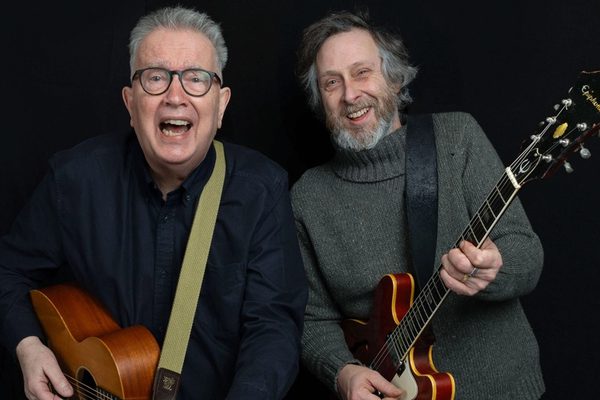
In conversation with Tom Robinson...
14 Oct 2025News Story
We spoke with the legendary musician, LGBTQ+ rights activist, and long-time BBC 6 Music broadcaster Tom Robinson to discuss his five-decade career, featuring punk-era anthems like 2-4-6-8 Motorway and his continued work supporting new musicians.
You've had a varied career, being both a solo artist, and playing as part of a group. How has this shaped your music and how you navigate the music industry?
The most successful group I worked with – the original Tom Robinson band – was also one of the shortest lived. It only lasted 2½ years but it burned very brightly. I was extraordinarily lucky to be able to work with a guitarist as good as Danny Kustow, and there was a chemistry to that original line-up that gave a real fire to those early records. I owe those three guys an enormous debt of gratitude because if it hadn't been for the music we made together early on, then I wouldn't still be able to tour as a working musician all these years later. I'm also very lucky to have also made some solo records that proved popular enough to make the pop charts in the mid 1980s, such as War Baby and Atmospherics: Listen to the Radio. However, most of the time I've been beavering away making records and playing gigs for a small but loyal audience who know and like the things I do... One of the most enjoyable bands I was in (Faith, Folk and Anarchy) came quite late in life in my early 50s. It was an almost accidental collaboration with two fellow songwriters – Martyn Joseph and Steve Knightley – and because we were all on an equal footing with mutual respect, it was huge fun to tour and record together. However, all three of us had busy careers and demands on our time so it's proved impossible to turn it into a long term proposition.
Having collaborated with musicians like Elton John, Peter Gabriel, and Dan Hartman, what’s the most significant takeaway from those shared experiences that still informs your approach to music today?
It's funny looking back on just how famous those people were at the time I met and worked with them. At the time I don't think I was really conscious of their status, and in a strange way neither were they. They were happy to just roll up their sleeves and get down to making music – they all wore the fact that they were hugely successful very lightly when it came down to creating new things from scratch. Some of the most creative people I ever met all had a certain humility... well not exactly humility but a lack of pride or ego, in their dealings with a fellow writer.
This tour, Then and Now, showcases music that spans across fifty years of your career. How has the music industry changed during this time?
The main change I've noticed is that the making of music is no longer absolutely controlled by gatekeepers. Back when I started in the 1970s, you would never reach an audience unless somebody at a radio station granted you permission to be on the airwaves. By the same token you could never make a record and sell it to the public unless somebody at a company gave you permission. The Internet has really broken down that kind of hierarchy, to the extent that a genuinely amazing new talent has a far greater chance of getting heard by the public today then they did back when I started. With the mobile phone in your pocket and a good pair of musical ears, you can quite literally record and publish a great sounding song from scratch without any investment whatsoever, and without needing anybody's permission to put it on YouTube. These days all you have to be is good. And although almost nobody makes any money from doing that, the truth is that over the last 50 years almost nobody in bands made much money from selling records in the conventional way anyway. The music industry always trousered the lion's share of any cash that got made. Even the successful artists only earned a fraction of the money that went to the industry itself. Mike Oldfield became very rich thanks to tubular bells, but Richard Branson became a multimillionaire and founded virgin records from his share of the proceeds. Even if there's no longer much cash for the average musician, we're infinitely better off now that artists have a full say in the process of production and distribution of their music.
You are joined on this tour by guitarist Adam Phillips. What do you enjoy about working together?
Adam and I first played together in 1994 and he's been my go to guitarist ever since, so that means we've been working together for 31 years. That's pretty incredible, especially when you consider he was only 24 and fresh out of Music college when we first met. Since then he has played with some incredible people and appeared on records by Backstreet Boys, Charlotte Church, Cher, Craig David, James Morrison, Lionel Richie, Mica Paris, Richard Ashcroft, Ricky Martin, Rod Stewart, Richard Ashcroft, Ray Lamontagne, Ronan Keating, Shania Twain, Tina Turner and Tom McRae - and that's just the famous ones! I count myself as lucky to have musician of his calibre as a friend, who is still willing to come out on tour with me after all these years. We have a musical telepathy after all this time that is a joyful experience every time we play together, every single night. With Adam the songs feel fresh minted every night.
What advice would you give to up-and-coming musicians about how to navigate the music industry in the 21st century?
I think the most important lesson I've learned over 50 years since my first album release in 1975 is to realise that the responsibility for your career ultimately rests with you, the artist. It's sometimes good to delegate it to some other entity such as a record company or manager, but only for as long as your interests align with theirs. Now especially, in an age of Spotify it's more important for an artist to focus directly on – and engage with – their audience. The music industry is not your friend; your real friend is your audience. The goal of every career should be to acquire a loyal paying audience for their music, and communicate directly with that audience through a mailing list. Don't rely on the likes of Universal Records - or Mark Zuckerberg for that matter - to mediate your relationship with the people who love your music. Keep it grass roots, keep it real, keep it direct.
Tom Robinson with Adam Phillips: Then and Now
Wed 15 Oct, 7.30pm